See important
guidance on the use of this record.
If you have any comments or new information about this record, please email us.
| HER Number: | MDV9672 |
|---|
| Name: | Torre Abbey, Torbay |
|---|
Summary
Torre Abbey, abbey of St. Saviour & Holy Trinity founded 1196 for an abbot and 6 other premonstratensian canons, who colonised it from the mother-house of welbeck. It later became the richest premonstratensian house in England, with 26 canons, though after the black death the numbers of canons were reduced to 11. At the dissolution in 1539 there were 8 canons.
Location
| Grid Reference: | SX 908 636 |
|---|
| Map Sheet: | SX96SW |
|---|
| Admin Area | Torbay |
|---|
| District | Torbay |
|---|
| Ecclesiastical Parish | TORMOHAM |
|---|
Protected Status
Other References/Statuses
- Old DCC SMR Ref: SX96SW/1
- Old SAM County Ref: 171
- Old SAM Ref: 24840
Monument Type(s) and Dates
- ABBEY (Early Medieval to XVIII - 1066 AD to 1800 AD)
Full description
Unknown, MIGRATED RECORD - MONUMENT PROTECTION PROGRAMME DATA (Migrated Record). SDV331.
Excavations have located sections of a channel to the w of the cloister that supplied water, from a source to the nw of the abbey, to the kitchens, with a side channel to remove waste from the gatehouse garderobe. Part of a culvert follows the alignment of the n wall of the church. These clearly represent only a fragment of the abbey's water management scheme. A spring is located some 50m to the se of the cloister ranges, but is no longer visible. The extent of the land originally granted to the abbey is known from its foundation charter. It amounted to a roughly rectangular area of some 800m by 300m enclosing approximately 24 hectares, with the abbey sited in the sw quadrant. The land forming the precinct was traditionally enclosed behind a wall, and contained, in addition to the nucleus of the church and cloister, all the buildings and structures, both agricultural and industrial, associated with the degree of self sufficiency that the abbey was capable of sustaining. Many of these structures would have been of timber or cob construction. The engraving of 1661 shows some stone structures not now existing, including a further gatehouse to the w of the abbey. In the mid 16c the antiquarian leland reported that the remains of 3 gatehouses were visible at torre. When the ornamental gates of the mansion, near abbey lodge, were moved a short distance to the s in 1972, the foundations of a substantial building were located which appear to be those of an outer gatehouse. Ground surface in vicinity of abbey appears to have been landscaped with the construction of the mansion. In general the ground has been raised by about 1m. The abbey was founded in 1196 by william brewer, on land granted from his manor of torre to the premonstratensian order. It was colonised by canons from the english mother house of welbeck in nottinghamshire, and dedicated to st saviour and the holy trinity. By the end of the 13c the abbey had been granted land throughout devon, and it benefited from the growth of newton abbot following the establishment of a weekly market. At this time there were 26 canons in residence, and the acquired wealth of the abbey made it the richest premonstratensian abbey in the country. A licence to crenellate was granted by edward iii in 1348. In 1370 the manor of torre came in to the ownership of the abbey. In 1539 there was an abbot and 16 canons in residence. Dissolved in 1539. A condition of the subsequent sale of the buildings was that they were to be rendered unfit for monastic use, and this was assisted by the crown's sequestration of all the roofing lead. In 1543 the abbey was granted by the crown to john st leger, and after twice changing ownership was purchased by thomas ridgeway, who remodelled the w range as a dwelling. In 1662 it was purchased by sir george cary, and the cary family converted the buildings into the present mansion during the 18c. In 1930 the house and its grounds were purchased by torbay borough council. The abbey and house are together listed as a grade i building, with the barn separately listed as grade i. Archaeological excavations were undertaken in the early 20c by watkin. In 1984 observations were made during the excavation of a service trench to the s of the mansion. Between 1986 and 1989 a large area of the church was excavated and consolidated for display (mpp).
Unknown, Unknown (Migrated Record). SDV1416.
Illustrations by swete (dro).
Untitled Source (Migrated Record). SDV3991.
Seymour (1977) gives only brief description of buildings. The abbey plan follows the usual plan of premonstratensian order with a north aisle added to church in 14th century. See clapham (1923). One of the present curators of the gallery has undertaken some recent diggings to uncover among other features, building foundations on the east side of the north transept. Tile and worked stone fragments from these and earlier investigations are displayed in the house without proper reference (timms).
WATKIN, Untitled Source (Migrated Record). SDV54436.
In the south transept of torre abbey lies a block of granite. On the upper surface are incised three circles. Granite was not used in the early masonry of torre abbey, and the block does not appear to be local dartmoor granite. The block was probably the corner, or foundation stone of the church, and may have been brought from france for that purpose (watkin).
Untitled Source (Migrated Record). SDV335.
Tor abbey was founded near the shore of the bay in 1196, and was, at the dissolution, the richest premonstratensian house in england. Considerable remains of the monastic buildings are to be seen, including the late 12th century entrance to the chapter house, the early 14th century gatehouse, the guest hall and the great barn. The present house of torre abbey is 17th and 18th century in date. The abbey site was bought in 1599 by thomas ridgeway, ancestor of the earls of londonderry (hoskins).
Pye, A., Untitled Source (Migrated Record). SDV7765.
During excavations circa 100 graves were revealed in the church, mostly in the north transept. Thirteen, in the nave and aisle, were fully excavated, and work on the skeletons was in progress 1989. A very large quantity of high quality architectural and sculptural fragments were recovered in the excavations. These require further work, but included parts of a very high quality late medieval tomb with the recumbent effigy of a knight, made of beer stone (pye).
Griffith, F. M., Untitled Source (Migrated Record). SDV8774.
The front part of the building dates from the c18, but the aerial view of torre abbey lets us see that behind the facade the west and south ranges of the abbey cloister still exist, while the front of the building has been enlarged by the addition of two slightly projecting wings (griffith).
Untitled Source (Migrated Record). SDV177625.
Main features noted (pevsner).
Timms, S. C., Untitled Source (Report - Survey). SDV2.
Vis=3/11/1981 (timms, s. + allan, j. ) the whole site including the area of the abbey cemetery to the north of the church and the presumed area of the outer court to the west is in the ownership of torbay borough council. The standing buildings are used as an art gallery and museum. The ruins are conserved for public display with aid of annual doe maintenance grant. The south range which is incorporated in the 18th century mansion retains its medieval undercroft. The west range is better preserved with surviving undercroft, gate tower and roof. Roof recently restored with doe grant. The ruined east range includes the fine 12th century doorway to the chapter house. The site of the abbey church on the north is largely incorporated in public gardens with circa one metre of made-up ground over the medieval floor level (timms).
Knowles, D. + Hadcock, R. N., Untitled Source (Migrated Record). SDV21724.
Torre abbey, abbey of st. Saviour & holy trinity founded 1196 for an abbot and 6 other premonstratensian canons, who colonised it from the mother-house of welbeck. It later became the richest premonstratensian house in england, with 26 canons, though after the black death the numbers of canons were reduced to 11. At the dissolution in 1539 there were 8 canons (knowles + hadcock).
BEER, Untitled Source (Migrated Record). SDV217601.
Beer discusses the siting and fabric of the abbey. Mostly built of local limestone, with some sandstone. The one piece of granite may be a pillar top or base. Pillars of purbeck marble flank the chapter house entrance (beer).
R. B. M., Untitled Source (Migrated Record). SDV2262.
Account of armed robbery of the abbey in 1351 (r. B. M. ).
Ordnance Survey Archaeology Division, Untitled Source (Ordnance Survey Archaeology Division Card). SDV24.
Vis=18/11/1952(os) identifiable remains of the abbey church consist of fragmentary portions of the north transept, north aisle, presbytery, the footings of the south wall of the nave and south transept, with chapels, chapter house, west wall and entrance doorway only. The western range with the guest hall over the abbot's lodging, and the cellarage with a 14th century porch remain. There are no visible external portions of the frater to be seen. The modern council offices were erected on the remains of the undercroft. Of the cloisters, the sole remaining identifiable wall is the eastern one, containing the chapter house, the doorway and entrance to the vestry and the slype. The remainder is heavily masked by modern buildings. There are no visible traces of the site of the dorter.
GAIMSTER ET AL, Untitled Source (Migrated Record). SDV24077.
Excavation by emafu in 1988. The e portion of the aisle, together with a newel stair which provided access to the crossing tower, and the n transept were excavated. The n transept originally possessed two chapels, which in the late medieval period were rebuilt and enlarged eastwards, in the process covering several earlier graves, originally inside the church. The enlarged n chapel was floored with imported dutch tiles, removed at the dissolution, within it the lines of a screen and of the alter dais were clearly visible. Little remained of the interior fittings of the s chapel. The n transept in this period possessed benches along its w and n walls, and was floored with slates. Fragments of several earlier floor levels survived although truncated by graves. A small niche was located in the sw corner of the transept, and a tomb recess in the n wall. This originally contained an early c15 recumbent armoured figure which was broken up at the dissolution. A particular concentration of graves was identified (but not excavated) in the n transept (gaimster et al).
Untitled Source (Migrated Record). SDV242.
The abbey's discrepant dedications are referred to (reichel).
MORRIS, Untitled Source (Migrated Record). SDV24281.
Torquay corporation purchased torre abbey and grounds for $44,000 in 1937.(morris).
Gibbons, P., Untitled Source (Migrated Record). SDV248529.
Vis=2/9/1993 (gibbons) set in a small area of parkland surrounded by the modern residential and recreational development of torquay. Monument includes the known extent of the upstanding and buried remains of an abbey of the premonstratensian canons in occupation from 1196 until 1539.
ROSE-TROUP, 1936-1937, Untitled Source (Migrated Record). SDV26112.
The cartulary of torre abbey in 1549 is included in arundell's contemporary account of lead taken from devon's dissolved religious houses (rose-troup, 1936-1937).
Torr, C., Untitled Source (Migrated Record). SDV289613.
Two grave slabs in east ogwell church believed to have come from torre abbey (torr).
ANON., 1862, Untitled Source (Migrated Record). SDV316161.
Described as a norbertine abbey. There had once been three gatehouses with octagonal turrets, only one of which can be seen. Ancient refectory was converted in 1779. Choir of abbey church calculated to have been approx.22m long, 9m wide, and the transept 29.5m wide. Entire length of fabric, including lady chapel, probably over 60m. Remains of tessellated pavement and stone coffins found (anon. , 1862).
BELAIEW, Untitled Source (Migrated Record). SDV316162.
A 19th century pamphlet notes that the early norman builders of torre abbey church used the norse measurements of the sajene and the arschine. Width of church is given as 49ft or 7 sajenes (1 sajene is 7ft) north wall is 4.8ft or 56in ie 2 arschines.1 arschine is 28" or 1/3 of a sajene. Width of aisle is 4 arschines. These measurements also used in russia. Not used by saxon builders. Brought to russia by the normans, and to england after the conquest of 1066 (belaiew).
WALKER,1961, Untitled Source (Migrated Record). SDV316165.
The abbey's freedom from episcopal visitations in the 14th century noted.(walker,1961).
WATKIN,1914, Untitled Source (Migrated Record). SDV316166.
The abbey was founded by lord william de briwere in 1196 of the premonstratensian order. It was dissolved in 1543. The buildings were bought by sir george cary in 1662, in whose family they remained for several centuries. Not much remains of the buildings: there are fragmentary remains of the church and domestic buildings, also the entrance of the cloister garth, and a rounded archway, richly moulded with two small windows. The refectory is now a chapel for the house. The gateway is in a good state of preservation, and is a very good example of that type of building. The tithe barn on the south of the abbey is a fine example and is similar to that at wells (watkin,1914).
WALKER,1968, Untitled Source (Migrated Record). SDV316174.
Torre abbey was founded in 1196. Of the abbey. In 1930 the house, ruins and grounds were acquired by the torquay corporation (walker,1968).
CARY, Untitled Source (Migrated Record). SDV316180.
Aspects of the 19th century history of the abbey are discussed, a plate shows the building as they were in 1810 (cary).
WATKIN, 1920, Untitled Source (Migrated Record). SDV316182.
The Cary family's ownership of torre abbey is described in some detail (watkin, 1920).
WATKIN, 1922-1923, Untitled Source (Migrated Record). SDV316185.
A bell hanging in the abbot's tower has an old english inscription which is a repetition of a word on a bell in abbotsham church (watkin, 1922-1923).
WATKINS, TTNHS., Untitled Source (Migrated Record). SDV316189.
Torre abbey church believed by author to have been built with norse standards of measurement (watkins, ttnhs. ).
NORTH, Untitled Source (Migrated Record). SDV316194.
Excavations by emafu on the site of the church at torre abbey between 1986 and 1989, in advance of consolidation, are reported by pye. The entire area of the church was excavated. It was originally built, with only one (north) aisle in the 13th century. Traces of stone benches, screens and choir stalls were excavated. The church was subjected to alterations in the 15th and 16th centuries. Detailed in report. Two new side chapels were constructed. Traces of floors, with encaustic medieval tiles, survive from this period. Following the dissolution the church was progressively demolished.
DINING HALL, Untitled Source (Migrated Record). SDV316199.
Visible remains exist in the form of a number of ruined and adapted structures, partly incorporated into a post-medieval mansion. The ruins are laid out in the traditional monastic plan in which a church and 3 ranges of 2-storied buildings were grouped around the central square open court of the cloister, with ancillary buildings further from the nucleus. They include the remains of the abbey church, and virtually complete examples of vaulted undercrofts, a tower, inner gatehouse and barn. Walls are constructed of random-rubble utilising local limestone and breccia, with carved details in finer limestone, purbeck marble and red sandstone. Cloister is laid out in a square with sides of 28m. On its n side, and at a slightly higher level, are the ruins of the church, of cruciform plan, aligned ew, and of 55m overall length. It consists of a nave and n aisle, of 14.5m overall width and separated by an arcade of 6 columns; transepts with e aisles each containing 2 chapels; and a presbytery at the e end. A tower originally stood above the crossing and its fallen remains obstruct the centre of the church. The sw corner of the nave abuts the ne corner of the w range. Recent excavations have added considerably to the understanding of the nature and development of the church demonstrating that the floor was tiled; the quire at the e end of the nave had underfloor acoustic chambers and was divided from the nave by screens and 2 altars; the tower had a spiral stair in its nw corner; in the 15/16c the northernmost chapel of the n transept was substantially enlarged; burials were present throughout the church and include 2 wall tombs, that in the n transept being early 15c and of exceptional design and craftsmanship. The most substantial remains are on the s + w sides of the cloister where the monastic buildings survive to roof height, having been adapted as part of the later mansion. Both ranges have undercrofts of groined vaults supported on central piers, with windows in their outer walls and floors of beaten earth. The principal traditional monastic use of these rooms was for storage. W range undercroft is 9.9m wide and has differences in design between its n and s halves. The central section has been subdivided by 2 cross walls to form a through-passage which provides access from outside and the cloister to both n and s vaults. Traces of decorative paint in a simple linear style can be seen beneath the flaking lime-wash on the ceiling. This passage appears to have functioned as a parlour, the only part of the cloister in which conversation was permitted. The 1st floor originally consisted of a substantial hall and apartments, traditionally utilised by the abbot. The hall retains the internal part of an early 16c wagon roof, and has a blocked fireplace in its e wall. Abutting the w face of the w range is a square four storied tower which forms a large extension of the abott's apartments. At ground level there is access from outside directly into the undercroft through-passage, and the presence of stone benches along the walls indicates that this area was an extension of the canon's parlour. The 1st floor room opens into the hall, and all 3 upper rooms and the roof are connected by a spiral stair partly housed in an external turret. The s range undercroft is 9.5m wide and has also been subdivided by 2 cross walls. The e vault has a fireplace in its e wall indicating that it functioned as the warming room. The central vault has a stair, now blocked, opening out of its n wall. All of the openings in the s wall have been blocked by the terrace of the later mansion. The 1st floor originally consisted of the frater (dining hall). In the sw corner of the cloister part of the medieval cobble floor is exposed and an adjacent wall contains a recessed lavatoria (washing place). In the angle between the s and w ranges are the remains of the kitchens, much altered by the later mansion, but including 3 small vaulted rooms and the remains of 2 fireplaces. The kitchens were connected to the abbot's apartments by a spiral stair.
DORMITORY, Untitled Source (Migrated Record). SDV316200.
The range of buildings on the e side of the cloister, abutting the s transept, has for the most part not been incorporated into the later mansion. It includes the ruins of the sacristy or vestry with a spiral stair to the 1st floor, and the chapter house, which would have originally been vaulted, and which has a fine 12c norman doorway, symmetrically flanked by 2 windows. To the s are the remains of a through-passage leading from the cloister and a further room of uncertain size connecting the e and s ranges. The ruins in this area have been obscured by the e wing of the mansion which in part consists of a folly of late 18c or early 19c date, which utilises architectural details from the abbey. The area between the s and e ranges was the traditional location of the reredorter (toilets) which would have been supplied with running water. The 1st floor of the e range would have been the dorter (dormitory).
TOILET, Untitled Source (Migrated Record). SDV316201.
A short distance to the east of the e range are the ruins of the infirmary, the visible part of which consists of a rectangular structure of some 20.3m by 9.7m. Traditionally infirmaries had their own kitchens, and the presence of a well, together with the remains of a hearth that were revealed in excavation, indicates that torre followed this pattern. Adjoining the sw corner of the kitchens is the early 14c inner gatehouse, the mohun gate, a 3-storied crenellated structure, complete but with a modern roof. It is asymmetric in plan, having multi-angular towers on 3 of the corners, and 2 arched and vaulted passageways, separated by an arcade. The main n passage was for mounted travellers and wheeled vehicles, the smaller passage for pedestrians. Both have ribbed vaults with decorated bosses, and are divided centrally by arches and jambs on which the doors were hung. The pedestrian passage has a cobbled floor. All of the external architectural detail is in sandstone. The ground floor accommodation consists of a room for the gate-keeper, with a fireplace, and a door opening into the pedestrian passage. A spiral stair within the se turret provides access from the outside to the upper apartments and the roof-walks. On the 1st floor there is a rectangular room above the pedestrian passage and gate-keeper's room, which has a vaulted ceiling and a fireplace. The 2nd floor consists of one large room with a fireplace, and a passage in its ne corner giving access to a garderobe (toilet) closet and evidently to a wall-walk above the 1st floor rooms over the kitchen. One narrow window on the ground floor of the nw tower has been modified as a gun loop for a small matchlock weapon.
DOE:9/2/1990, Untitled Source (Migrated Record). SDV316203.
Smc granted for erection of a 15" diam cast aluminium plaque in blue enamel with white lettering (doe:9/2/1990).
DOE:27/11/1991, Untitled Source (Migrated Record). SDV316204.
Smc granted for a new staircase to the undercroft (doe:27/11/1991).
DNH:21/3/1994, Untitled Source (Migrated Record). SDV316205.
Smc granted for installation of handrails, grab handles, and replacement of taps with lever handles in existing toilets (dnh:21/3/1994).
DNH:6/5/1994, Untitled Source (Migrated Record). SDV316206.
Smc granted for installation of 2 cctv cameras in the spanish barn and associated external cables, installation of security floodlighting, illuminating w side of abbey, the main gatehouse and n side of the spanish barn, and removal of existing floodlight switch gear from the porter's lodge in mohun gatehouse to the modern kitchen servery (dnh:6/5/1994).
DNH:31/8/1994, Untitled Source (Migrated Record). SDV316207.
Smc granted for works concerning the strengthening of a structural beam in a georgian extension to the rear of torre abbey (dnh:31/8/1994).
DNH:12/10/1994, Untitled Source (Migrated Record). SDV316208.
Smc granted for works concerning the provision of a secondary means of escape from the mayor's parlour, and improved facilities for the mayor's robing room, foyer, visitors' toilet and museum stores (dnh:12/10/1994).
DNH:12/3/1996, Untitled Source (Migrated Record). SDV316209.
SMC granted for works comprising, (a) repairs to the monastic ruins; (b) the insertion of a fire escape door to the vestry and to the porch tower; (c) security improvements to the north east courtyard; (d) the refurbishment of gallery 6; (e) the conversion of former public toilets to temporary exhibit store; and (f) repairs to external garden walls (dnh:12/3/1996).
DNH:13/2/1997, Untitled Source (Migrated Record). SDV316210.
Smc granted for works to strengthen the principal intermediate floor beam to gallery six (dnh:13/2/1997).
DNH:22/12/1997, Untitled Source (Migrated Record). SDV316212.
Smc granted for the replacement of the previously destroyed bowls' pavilion (dnh:22/12/1997).
DNH:30/12/1997, Untitled Source (Migrated Record). SDV316213.
Smc granted concerning the excavation of an 18" trench (dnh:30/12/1997).
Untitled Source (Migrated Record). SDV316214.
Hoskins, w. G. /devon/(1954)502.
Untitled Source (Migrated Record). SDV316215.
Watkin, h. R. /tda/46(1914)328-329/the use of a norse standard of measurement by the normans in the 11th and 12th centuries.
Untitled Source (Aerial Photograph). SDV316216.
Aph=nmr/sx9063.
Untitled Source (Migrated Record). SDV316217.
Osa=sx96sw10/plan and photograph.
Untitled Source (Migrated Record). SDV316218.
Walker, h. H. /tda/100(1968)125/the causeway near torre abbey in south devon.
Untitled Source (Migrated Record). SDV316219.
Appleton, e. /tda/6(1874)496-500/architectural notes of torre abbey, torquay, 1874.
Untitled Source (Migrated Record). SDV316220.
Watkin, h. R. /a short description of torre abbey, torquay, devonshire (1909).
Untitled Source (Migrated Record). SDV316221.
Hope, w. H. St. J. /archaeological journal/70(1913)546-547.
Untitled Source (Migrated Record). SDV316222.
Clapham, a. W. /archaeologia/second series:23(1923)117-146/the architecture of the premonstratensians with special reference to their buildings in england.
Untitled Source (Migrated Record). SDV316223.
Seymour, d. /torre abbey/(1977)13-23/the abbey buildings.
Untitled Source (Migrated Record). SDV316224.
Des=timms, s. /3/11/1981/as above.
Untitled Source (Migrated Record). SDV316225.
Anon. /jbaa/18(1862)185-186/proceedings of the baa.
Untitled Source (Migrated Record). SDV316226.
Belaiew, n. /jbaa/26(1920)203-204/notes on the russian and norse measurements used by the early norman builders.
Untitled Source (Migrated Record). SDV316227.
Birch, w. G. /jbaa/28(1872)45-64/on three lists of monasteries compiled in the 13th century.
Untitled Source (Migrated Record). SDV316228.
Morris, j. E. /jbaa/37(1931)247-252/notes from county correspondents.
Untitled Source (Migrated Record). SDV316229.
Radford, c. A. R. /arch. J. /114(1957)149-150.
Untitled Source (Migrated Record). SDV316230.
Watkin, h. R. /tda/50(1918)85,110/a great devonian: william briwer.
Untitled Source (Aerial Photograph). SDV316231.
Aph=cuc/cf 36-37(16/6/1949)/cf 37 in smr.
Untitled Source (Migrated Record). SDV316232.
Walker, h. H. /tda/93(1961)324,325/notes for a study of bishop walter de stapledon and the church in the westcountry in the early 14th century.
Untitled Source (Migrated Record). SDV316233.
Knowles, d. + hadcock, r. N. /medieval religious houses/(1971)185,192.
Untitled Source (Migrated Record). SDV316234.
Reichel, o. J. /dcnq/9 pt.1(1916-1917)110/teigngrace church.
Untitled Source (Migrated Record). SDV316235.
R. B. M. /dcnq/14(1926-1927)25/sacrilege at torre abbey in 1931.
Untitled Source (Migrated Record). SDV316236.
Cary, l. /dcnq/15(1928-1929)1-7 pl/nelson and st. Vincent at torre abbey.
Untitled Source (Migrated Record). SDV316237.
Watkin, h. R. /dcnq/14(1926-1927)193/william briwer.
Untitled Source (Migrated Record). SDV316238.
Watkin, h. R. /dcnq/11 pt.2(1920)1-46/the house of stuart and the cary family. James ii and torre abbey.
Untitled Source (Migrated Record). SDV316239.
Watkin, h. R. /dcnq/10 pt1(1918-1919)145,260 pl/curious stone at torre abbey.
Untitled Source (Migrated Record). SDV316240.
Baring-gould, s. /dcnq/10 pt1(1918-1919)224/curious stone at torre abbey.
Untitled Source (Migrated Record). SDV316241.
Watkin, h. R. /dcnq/12(1922-1923)25-27/bell inscriptions at abbotsham church and torre abbey.
Untitled Source (Migrated Record). SDV316242.
Rose-troup, f. /dcnq/19(1936-1937)142-144/cartularies of religious houses in devon.
Untitled Source (Migrated Record). SDV316243.
Rose-troup, f. /dcnq/19(1936-1937)122-126/lead from the dissolved religious houses in devon in 1549.
Untitled Source (Migrated Record). SDV316244.
Des=timms, s. C. /note on watching brief/as above.
Untitled Source (Migrated Record). SDV316245.
Doe/hhr:torbay borough/(10/1/1975)151.
Untitled Source (Migrated Record). SDV316246.
Pevsner, n. /buildings of england: south devon/(1952)290-291.
Untitled Source (Migrated Record). SDV316247.
Watkin, h. R. /ttnhs. /2(1915-1920)303/norse standards of measurement.
Untitled Source (Migrated Record). SDV316248.
Watkin, h. R. /ttnhs. /4(1922-1926)147/the manor of tormohun.
Untitled Source (Migrated Record). SDV316249.
Torr, v. J. /dcnq/29(1962-1964)217-220/east ogwell slabs.
Untitled Source (Migrated Record). SDV316250.
Dro=564m/2/99,115(illustrations by swete).
Untitled Source (Aerial Photograph). SDV316251.
Aph=dcc pty/3648-3656(26/11/1984)/in smr.
Untitled Source (Migrated Record). SDV316252.
Griffith, f. /devon's past: an aerial view/(1988)81.
Untitled Source (Migrated Record). SDV316253.
Pye, a. R. /torre abbey excavations 1986-89:preliminary results/(1989)/(emafu report 89.14)copy in parish file.
Untitled Source (Migrated Record). SDV316254.
Youngs, s. M. + clark, j. + gaimster, d. R. M. + barry, t. /med. Arch/32(1988)225-314/medieval britain and ireland in 1987.
Untitled Source (Migrated Record). SDV316255.
Gaimster, d. R. M. + margeson, s. + barry, t. /med arch/33(1989)161-241/medieval britain and ireland in 1988.
Untitled Source (Migrated Record). SDV316256.
Beer, p. /ttnhs/19.2(1983-4)62-3/architecture and geology in torquay.
Untitled Source (Migrated Record). SDV316257.
Patch, p. A. + hendersons, c. G/torre abbey excavation 1986. Preliminary report/(1986).
Untitled Source (Migrated Record). SDV316258.
Doe/smc letter/(12/5/1986) in smr.
Untitled Source (Migrated Record). SDV316259.
Doe/smc letter/(3/7/1986) in smr.
Untitled Source (Migrated Record). SDV316260.
Doe/smc letter/(8/1/1987).
Untitled Source (Migrated Record). SDV316261.
Doe/smc letters/(7/1/1987) + (28/1/1987) in smr.
Untitled Source (Migrated Record). SDV316262.
Doe/smc letter/(6/5/1988) in smr.
Untitled Source (Migrated Record). SDV316263.
Westcott, k. /exeter archaeology 1984-5/(1985)75/watching brief at torre abbey 1984.
Untitled Source (Migrated Record). SDV316264.
Des=mpp/134670.
Untitled Source (Migrated Record). SDV316265.
Doe/smc letter/(9/2/1990)/in smr.
Untitled Source (Migrated Record). SDV316266.
Doe/smc letter/(27/11/1991)/in smr.
Untitled Source (Migrated Record). SDV316267.
Dnh/smc letter/(21/3/1994)/in smr.
Untitled Source (Migrated Record). SDV316268.
Dnh/smc letter/(6/5/1994)/in smr.
Untitled Source (Migrated Record). SDV316269.
Dnh/smc letter/(31/8/1994)/in smr.
Untitled Source (Migrated Record). SDV316270.
Dnh/smc letter/(12/10/1994)/in smr.
Untitled Source (Migrated Record). SDV316271.
Des=weddell, p. J. /drhs/(1987)/in pf.
Untitled Source (Migrated Record). SDV316272.
Dnh/smc letter/(12/3/1996)/in smr.
Untitled Source (Migrated Record). SDV316273.
Dnh/smc letter/(13/2/1997)/in smr.
Untitled Source (Migrated Record). SDV316274.
Wmn/(9/8/1996)/in pf.
Untitled Source (Migrated Record). SDV316275.
Dnh/smc letter/(22/12/1997)/in smr.
Untitled Source (Migrated Record). SDV316276.
Dnh/smc letter/(30/12/1997)/in smr.
WATKIN, DCNQ 14, Untitled Source (Migrated Record). SDV316999.
William briwer endowed torre abbey with the churches of torre, bradworthy, buckland brewer and wolborough by his own gift (watkin, dcnq 14).
Department of Environment, Untitled Source (Migrated Record). SDV326677.
Smc granted for minor internal alterations and reinforcement of doorway masonry (doe).
Birch, W. G., 1892, On Three Lists of Monasteries Compiled in 13th Century (Article in Serial). SDV131388.
The abbey appears as torre, sancti salvatoris, on a list of monasteries compiled in the 13th century (birch).
Delderfield, E., 1977, Scrapbook 2 (Article in Serial). SDV77.
Investigation during repair to clock tower suggests a 12c date. The quoins are of salcombe sandstone, similar to other early parts of the abbey, including the e wall of the cloister and main doorway of the spanish barn. Upper part of tower is of brown triassic sandstone suggesting the structure was heightened probably in 14c. Extensions on n + s sides of the tower were also medieval. The n medieval window lighting the staircase in the n extension is shown to be in situ, not re-used as previously believed. Repairs will include a new lead roof, stonework conservation, internal plastering, resetting windows and replacing external render (wmn).
Griffiths, F. M., 1988, DAP/KB, 6-8a (Aerial Photograph). SDV171002.
Bartlett, A.D.H., 2003, Torre Abbey, Torquay, Devon: Geophysicals Survey (Report - Geophysical Survey). SDV363274.
This resistivity survey carried out in the grounds of Torre Abbey produced a number of findings which are likely to relate to structures within the monastic precinct. Features detected by the survey include ranges of buildings which are likely to indicate a farmyard to the south of the surviving barn. Part of the site is currently a golf course, and detailed interpretation is hindered in places by high readings from the sandy bunkers, but additional wall footings appear to survive at several locations. Linear and rectilinear features can be seen, particularly to the south of the 18th century house (now the museum), which occupies the site of the abbey. Other findings include an extended linear feature which could indicate a southern boundary to the monastic precinct, as well as structures which could relate to the monastic mill, as identified in previous investigations of the site. Other linear markings towards the east of the survey could indicate paths or drains, perhaps from more recent periods in the history of the site.
Historic England, 2022, Torre Abbey Historic House and Gallery, Torbay (Correspondence). SDV364861.
Historic England application for Scheduled Monument Consent to undertake repairs to the Gatehouse, south west range, south east range, north end of the west range, courtyard 4, and adjacent groundworks. Photographs shall be prepared of the monument before the start and after completion of the works along with a programme of archaeological work before and during the development in accordance with a written scheme of investigation which has been submitted to and approved by the Secretary of State advised by Historic England. This shall cover both groundworks and structural repairs.
Historic England, 2022, Torre Abbey, Creation of Hybrid Work Space and Meeting Room (Correspondence). SDV364879.
Consent given for Scheduled Monument application to create a hybrid work space and meeting room within an existing store room. Necessary recording arrangements are secured by condition.
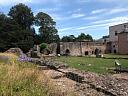
Watts, S., 2023, Torre Abbey (Ground Photograph). SDV365861.
Sources / Further Reading
| SDV131388 | Article in Serial: Birch, W. G.. 1892. On Three Lists of Monasteries Compiled in 13th Century. Journal of the British Archaeological Association. 28. Unknown. |
| |
| | |
| SDV1416 | Migrated Record: Unknown. Unknown. Devon Record Office Collection. Unknown. |
| SDV171002 | Aerial Photograph: Griffiths, F. M.. 1988. DAP/KB. Devon County Council Aerial Photograph. Photograph (Paper). 6-8a. |
| |
| | |
| SDV177625 | Migrated Record: |
| SDV2 | Report - Survey: Timms, S. C.. |
| |
| | |
| SDV21724 | Migrated Record: Knowles, D. + Hadcock, R. N.. |
| SDV217601 | Migrated Record: BEER. |
| SDV2262 | Migrated Record: R. B. M.. |
| SDV24 | Ordnance Survey Archaeology Division Card: Ordnance Survey Archaeology Division. OSA. Card Index. |
| |
| | |
| SDV24077 | Migrated Record: GAIMSTER ET AL. |
| SDV242 | Migrated Record: |
| SDV24281 | Migrated Record: MORRIS. |
| SDV248529 | Migrated Record: Gibbons, P.. |
| SDV26112 | Migrated Record: ROSE-TROUP, 1936-1937. |
| SDV289613 | Migrated Record: Torr, C.. |
| SDV316161 | Migrated Record: ANON., 1862. |
| SDV316162 | Migrated Record: BELAIEW. |
| SDV316165 | Migrated Record: WALKER,1961. |
| SDV316166 | Migrated Record: WATKIN,1914. |
| SDV316174 | Migrated Record: WALKER,1968. |
| SDV316180 | Migrated Record: CARY. |
| SDV316182 | Migrated Record: WATKIN, 1920. |
| SDV316185 | Migrated Record: WATKIN, 1922-1923. |
| SDV316189 | Migrated Record: WATKINS, TTNHS.. |
| SDV316194 | Migrated Record: NORTH. |
| SDV316199 | Migrated Record: DINING HALL. |
| SDV316200 | Migrated Record: DORMITORY. |
| SDV316201 | Migrated Record: TOILET. |
| SDV316203 | Migrated Record: DOE:9/2/1990. |
| SDV316204 | Migrated Record: DOE:27/11/1991. |
| SDV316205 | Migrated Record: DNH:21/3/1994. |
| SDV316206 | Migrated Record: DNH:6/5/1994. |
| SDV316207 | Migrated Record: DNH:31/8/1994. |
| SDV316208 | Migrated Record: DNH:12/10/1994. |
| SDV316209 | Migrated Record: DNH:12/3/1996. |
| SDV316210 | Migrated Record: DNH:13/2/1997. |
| SDV316212 | Migrated Record: DNH:22/12/1997. |
| SDV316213 | Migrated Record: DNH:30/12/1997. |
| SDV316214 | Migrated Record: |
| SDV316215 | Migrated Record: |
| SDV316216 | Aerial Photograph: |
| |
| | |
| SDV316217 | Migrated Record: |
| SDV316218 | Migrated Record: |
| SDV316219 | Migrated Record: |
| SDV316220 | Migrated Record: |
| SDV316221 | Migrated Record: |
| SDV316222 | Migrated Record: |
| SDV316223 | Migrated Record: |
| SDV316224 | Migrated Record: |
| SDV316225 | Migrated Record: |
| SDV316226 | Migrated Record: |
| SDV316227 | Migrated Record: |
| SDV316228 | Migrated Record: |
| SDV316229 | Migrated Record: |
| SDV316230 | Migrated Record: |
| SDV316231 | Aerial Photograph: |
| |
| | |
| SDV316232 | Migrated Record: |
| SDV316233 | Migrated Record: |
| SDV316234 | Migrated Record: |
| SDV316235 | Migrated Record: |
| SDV316236 | Migrated Record: |
| SDV316237 | Migrated Record: |
| SDV316238 | Migrated Record: |
| SDV316239 | Migrated Record: |
| SDV316240 | Migrated Record: |
| SDV316241 | Migrated Record: |
| SDV316242 | Migrated Record: |
| SDV316243 | Migrated Record: |
| SDV316244 | Migrated Record: |
| SDV316245 | Migrated Record: |
| SDV316246 | Migrated Record: |
| SDV316247 | Migrated Record: |
| SDV316248 | Migrated Record: |
| SDV316249 | Migrated Record: |
| SDV316250 | Migrated Record: |
| SDV316251 | Aerial Photograph: |
| |
| | |
| SDV316252 | Migrated Record: |
| SDV316253 | Migrated Record: |
| SDV316254 | Migrated Record: |
| SDV316255 | Migrated Record: |
| SDV316256 | Migrated Record: |
| SDV316257 | Migrated Record: |
| SDV316258 | Migrated Record: |
| SDV316259 | Migrated Record: |
| SDV316260 | Migrated Record: |
| SDV316261 | Migrated Record: |
| SDV316262 | Migrated Record: |
| SDV316263 | Migrated Record: |
| SDV316264 | Migrated Record: |
| SDV316265 | Migrated Record: |
| SDV316266 | Migrated Record: |
| SDV316267 | Migrated Record: |
| SDV316268 | Migrated Record: |
| SDV316269 | Migrated Record: |
| SDV316270 | Migrated Record: |
| SDV316271 | Migrated Record: |
| SDV316272 | Migrated Record: |
| SDV316273 | Migrated Record: |
| SDV316274 | Migrated Record: |
| SDV316275 | Migrated Record: |
| SDV316276 | Migrated Record: |
| SDV316999 | Migrated Record: WATKIN, DCNQ 14. |
| SDV326677 | Migrated Record: Department of Environment. |
| SDV331 | Migrated Record: Unknown. MIGRATED RECORD - MONUMENT PROTECTION PROGRAMME DATA. Monument Protection Programme. Unknown. |
| SDV335 | Migrated Record: |
| SDV363274 | Report - Geophysical Survey: Bartlett, A.D.H.. 2003. Torre Abbey, Torquay, Devon: Geophysicals Survey. English Heritage Centre for Archaeology Report. 58/2003. Digital. |
| |
| | |
| SDV364861 | Correspondence: Historic England. 2022. Torre Abbey Historic House and Gallery, Torbay. Application for Scheduled Monument Consent. Digital. |
| |
| | |
| SDV364879 | Correspondence: Historic England. 2022. Torre Abbey, Creation of Hybrid Work Space and Meeting Room. Schedule Monument Consent Letter. Email. |
| |
| | |
| SDV365861 | Ground Photograph: Watts, S.. 2023. Torre Abbey. Digital. |
| |  |
| | Linked images:3 |
| SDV3991 | Migrated Record: |
| SDV54436 | Migrated Record: WATKIN. |
| SDV77 | Article in Serial: Delderfield, E.. 1977. Scrapbook 2. Western Morning News. Newspaper/Magazine Cuttin. |
| |
| | |
| SDV7765 | Migrated Record: Pye, A.. |
| SDV8774 | Migrated Record: Griffith, F. M.. |
Associated Monuments
| MDV9676 | Related to: Cross Shaft to west of Torre Abbey (Monument) |
| MDV8680 | Related to: Shiphay Barn, Torquay (Building) |
| MDV124142 | Related to: Torre Abbey, Torquay (Monument) |
Associated Finds: none recorded
Associated Events
- EDV7908 - Conservation plan for Torre Abbey
| Date Last Edited: | Feb 8 2024 6:17PM |
|---|
Search results generated by the HBSMR Gateway from exeGesIS SDM Ltd.